

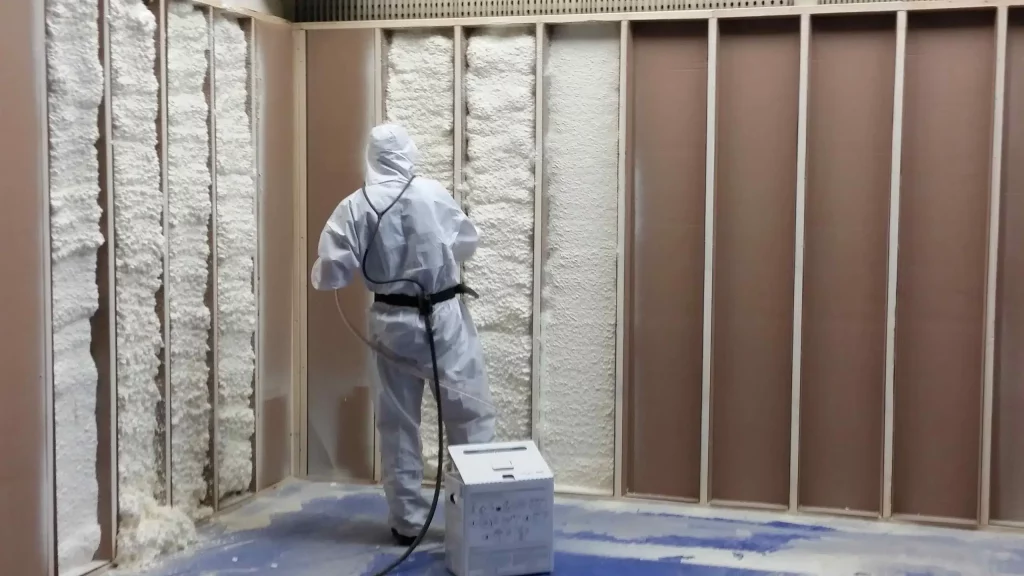
Professional spray foam insulation combines several home upgrades into one application: high R-value thermal protection, whole-home air sealing, moisture resistance, and sound control. For homeowners in Springfield, Missouri, the payoff is measurable. ENERGY STAR estimates that air sealing combined with added insulation saves the average household about 15% on heating and cooling costs, and spray foam does both jobs in a single step because it expands into cracks and cavities that fiberglass and cellulose cannot fill. The right approach depends on your home’s age, its climate zone, and whether open-cell or closed-cell foam fits each area, so this guide breaks down every major benefit and shows which application suits different projects.
TLDR: Key Takeaways
- Air sealing plus added insulation cuts an average of 15% from heating and cooling costs and 11% from total energy costs, according to EPA estimates published by ENERGY STAR.
- The Spray Polyurethane Foam Alliance reports spray foam can save 30% or more on heating and cooling while serving as insulation, air barrier, and vapor barrier in one product.
- U.S. Department of Energy studies cited by Wikipedia attribute roughly 40% of a home’s energy loss to air infiltration through walls, windows, and doorways.
- Closed-cell foam delivers about R-5.1 to R-6 per inch, while fiberglass sits near R-3 to R-4 per inch, so foam reaches recommended insulation levels in tighter spaces.
- EPA guidance treats moisture control as the foundation of mold control, and closed-cell foam adds a vapor barrier that supports that goal.
- ENERGY STAR reports 9 out of 10 U.S. homes are under-insulated, and Springfield’s zone 4A climate calls for up to R-60 in the attic.
Why Air Sealing Is the Biggest Benefit of Spray Foam Insulation
Spray foam starts as a liquid, expands up to 30 to 60 times its applied volume, and hardens into a rigid or semi-rigid solid that bonds to wood, concrete, and metal. Read our customer reviews to see what local customers say about our insulation services. That expansion is the difference maker. Where a fiberglass batt leaves gaps around wiring, ducts, and framing, foam fills them, and Wikipedia describes this air-sealing ability as spray foam’s most important attribute because it stops convective heat transfer, the movement of warm air escaping in winter and sneaking in during summer.
The stakes are high. Department of Energy research attributes about 40% of a home’s energy loss to air infiltration through the building envelope, and ENERGY STAR compares the combined leaks in a typical home to leaving a window open every day of the year. Foam closes that window.
Lower Energy Bills All Year Long
Because foam insulates and seals simultaneously, your heating and cooling system runs shorter cycles to hold the same temperature. The savings stack up in three ways:
- Average savings from sealing and insulating: about 15% on heating and cooling costs, or 11% on total energy costs, per EPA estimates cited by ENERGY STAR.
- Spray foam’s specific advantage: the Spray Polyurethane Foam Alliance reports SPF can save 30% or more on heating and cooling when it replaces or outperforms conventional assemblies.
- Long-term efficiency: foam holds its shape and R-value over time, unlike materials that settle or leave gaps as a house moves.
Insulation upgrades may also qualify for federal tax credits, which ENERGY STAR maintains for residential energy efficiency projects, adding another financial reason to act.
Higher R-Value Per Inch Than Traditional Insulation
R-value measures a material’s resistance to heat flow, and higher numbers mean better thermal performance. ENERGY STAR recommends up to R-60 in attics for our Zone 4A climate, and foam’s density helps you hit those targets without eating up wall cavity or rafter space.
| Insulation Type | Approx. R-Value Per Inch | Air Barrier | Moisture Barrier | Best Use |
|---|---|---|---|---|
| Fiberglass batts | R-3 to R-4 | No | No | Open framing with few obstructions |
| Open-cell spray foam | ~R-3.8 (air barrier at 5.5+ in.) | Yes, when thick enough | No | Interior walls, sound control |
| Closed-cell spray foam | R-5.1 to R-6 | Yes | Yes, at minimum thickness | Attics, crawl spaces, basements |
Source: R-value ranges per Wikipedia’s technical summary of spray polyurethane foam.
Moisture Resistance and Mold Prevention
Condensation on cold surfaces is one of the most common ways moisture gets into wall assemblies, and the EPA specifically recommends covering cold surfaces with insulation to prevent it. The agency is equally direct about the stakes: moisture control is the key to mold control, wet materials must dry within 24 to 48 hours to prevent growth, and indoor humidity should stay between 30 and 50 percent.
Closed-cell spray foam supports that target directly. At its minimum installed thickness, it functions as both an air barrier and a vapor barrier, which reduces condensation inside walls and, as Wikipedia notes, lowers the chance of mold, mildew, and rotting wood in the building envelope.
Better Comfort, Quieter Rooms, and Cleaner Indoor Air
The benefits go beyond the utility bill. Homeowners notice:
- Even temperatures from room to room, without hot or cold spots near exterior walls.
- Less noise, because foam reduces airborne sound transfer through walls, floors, and rooflines.
- Fewer drafts, and less pollen, dust, and pests, since sealed gaps are also entry points for everything you don’t want indoors.
- Better humidity control, which ENERGY STAR lists among the core comfort improvements from sealing and insulating.
Open-cell foam deserves a mention here: it is often specified for interior walls specifically because it absorbs and blocks airborne sound between rooms.
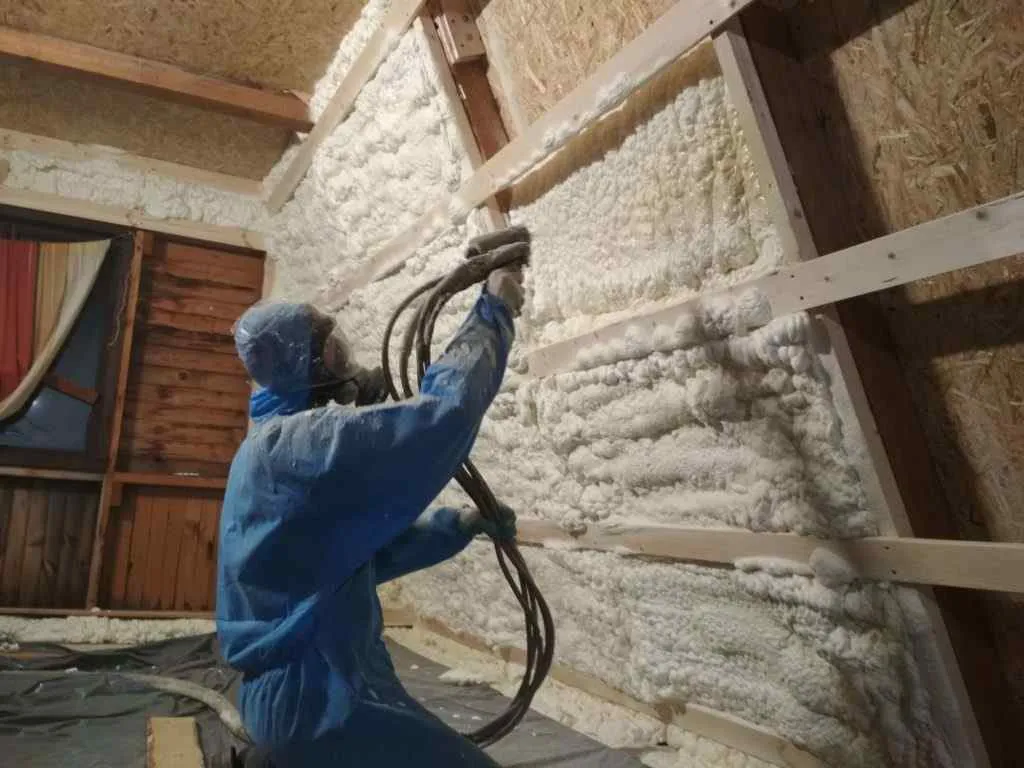
Open Cell vs Closed Cell Spray Foam: Which Type Fits Your Home?
| Characteristic | Open Cell | Closed Cell |
|---|---|---|
| Density | Light, half-pound foam | Medium, two-pound rigid foam |
| R-value per inch | ~R-3.8 | R-5.1 to R-6 |
| Barrier roles | Air barrier at 5.5+ inches | Air barrier and vapor barrier at min. thickness |
| Feel | Soft, sponge-like | Rigid, adds structural stiffness |
| Best applications | Interior sound walls, some attic cavities | Unvented attics, crawl spaces, basements, rim joists |
| Placement | Interior use only | Interior or exterior |
Where Spray Foam Insulation Delivers the Most Value
| Project | Recommended Approach | Primary Benefit |
|---|---|---|
| Attic (zone 4A) | Closed-cell to reach R-60 target | Biggest single cut in heat loss |
| Crawl space or basement walls | Closed cell | Moisture plus thermal control |
| Existing walls | Wall injection through small drilled holes | Retrofit sealing without demolition |
| Interior partitions | Open cell | Sound dampening between rooms |
| Rim joists and odd cavities | Closed cell | Seals gaps framing cannot reach |
Why Professional Installation Matters
Spray foam is a two-part chemical reaction, and the result depends on precise mixing ratios, surface temperature, and applied thickness. Wikipedia notes the material emits irritating fumes while curing, so trained installers use full respiratory and skin protection and keep occupants out until the foam is inert, which happens quickly once cured. Improper application, especially in damp spaces, can trap moisture and damage the structure. That is why we recommend working with a crew trained to industry-recognized standards, such as certification through the Spray Polyurethane Foam Alliance’s Professional Certification Program.
Signs You’ve Chosen the Right Approach
- Your installer explains foam type, target thickness, and coverage areas in writing before starting.
- Questions about your home’s ventilation, moisture history, and HVAC sizing come up early.
- Safety practices, protective equipment, and re-entry timelines are stated clearly.
- The proposal addresses your specific goals, whether that is lower bills, comfort, or moisture control, rather than a one-size-fits-all pitch.
Get Professional Spray Foam Insulation for Your Springfield Home
At Springfield Excel Spray Foam, we install open-cell and closed-cell foam for attics, crawl spaces, walls, and rim joists throughout Springfield, Missouri, and we match the material to each space instead of selling one product for every job. Our team will assess your home, explain exactly which benefits you can expect, and give you a clear written scope before any foam is sprayed. Call us at (417) 815-4629 or email [email protected] to get started.
Your home deserves insulation that works as hard as you do, and our crew is ready to seal in the comfort you have been missing.
FAQs
How long does spray foam insulation last?
It adheres firmly in place and does not sag, settle, or shift the way batts and loose fill can, so performance holds for decades. The material has been used in homes since the 1960s.
Is spray foam safe to live with?
Once fully cured, the foam is inert and stable. During application, our crews wear full protective equipment and keep occupants out of the work area until curing is complete.
Open cell or closed cell for my attic?
Closed cell suits attics and crawl spaces because it delivers higher R-value per inch plus a moisture barrier. Open cell is better suited to interior walls where sound control matters most.
Can spray foam be added to an existing home?
Yes. Common retrofits include attic floors, rim joists, crawl spaces, basement walls, and wall injection, which fills existing wall cavities through small drilled holes.
How disruptive is the installation process?
Most projects involve modest prep, application, and a short curing window, typically wrapping up within a day or two depending on scope. We confirm ventilation guidance and re-entry times before leaving.
Sources
- ENERGY STAR – Why Seal and Insulate? – EPA estimates on savings from air sealing and insulation, plus the finding that 9 out of 10 U.S. homes are under-insulated.
- ENERGY STAR – Recommended Home Insulation R-Values – R-value definitions and climate zone insulation targets, including R-60 attic levels for zone 4A.
- EPA – A Brief Guide to Mold, Moisture and Your Home – Federal guidance on moisture control, indoor humidity targets, and mold prevention in residential buildings.
- Spray Polyurethane Foam Alliance – Residential SPF – Industry association data on spray foam’s combined insulation, air barrier, and vapor barrier performance and contractor certification standards.
- Wikipedia – Spray Foam – Technical reference on spray foam R-values per inch, expansion properties, heat transfer behavior, and installation safety considerations.