

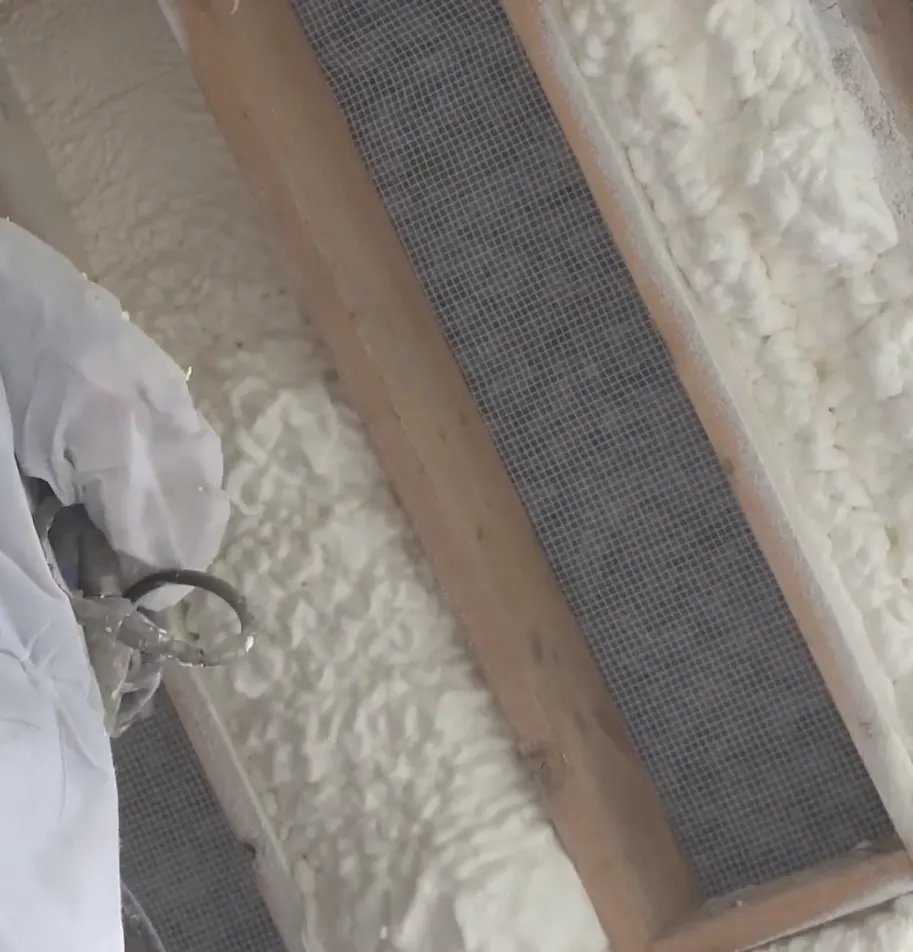
Insulation reduces heat transfer through your home’s building envelope by trapping air in millions of tiny pockets, slowing all three ways heat moves: conduction through solid materials, convection through moving air, and radiation across open spaces. Insulation solutions in Springfield, MO can help homeowners address weak points in the building envelope with the right approach for each application. The building envelope is the shell that separates your conditioned indoor air from outdoor weather, including the walls, roof, ceiling, foundation, windows, and doors. Because heat always travels from warm to cold, a weak envelope leaks heating energy all winter and pulls in superheated attic air all summer. The right solution depends on your climate zone, where the weak points sit in your envelope, and which insulation type fits each application. In this guide, we break down the physics, the R-values that measure performance, and the strategy we use to help Springfield, MO homeowners keep conditioned air where it belongs.
TL;DR
- Heat moves in any direction, from warm spots to cold ones, through three modes: conduction, convection, and radiation. Insulation slows all three at once.
- Still air is a poor conductor of heat. Insulation works by dividing air space into small pockets where air cannot circulate, cutting conductive and convective flow.
- R-value measures resistance to heat flow, and higher numbers mean better thermal performance. In climate zone 4, ENERGY STAR recommends attic levels up to R60 and R19 over unconditioned floors.
- In most houses, radiation accounts for less than 10 percent of heat loss. Conduction and convection do most of the damage, and convection is the main culprit in leaky homes.
- Convective loops inside walls and ceilings can account for 10 to 20 percent of a home’s total heat loss, which is why air sealing matters as much as insulation depth.
- Thermal bridging through wood studs lowers real-world performance; a nominal R-20 batt in a 2×6 wall delivers roughly R-17 effective once framing is counted.
- Gaps, voids, and compressed insulation let heat bypass the material entirely, so installation quality is as decisive as product choice.
- Spray foam insulation combines high R-value with air sealing in one application, addressing conduction and convection together in a single step.
What Is a Building Envelope, and Why Does Heat Keep Testing It?
The building envelope is the physical separator between the conditioned and unconditioned environment, resisting the transfer of air, water, heat, and noise. It includes the foundation, above-grade walls, roof, windows, doors, and ceiling, and its many jobs fall into three categories: support, control, and finish. The control layer, which manages rain, air, heat, and vapor in that order, includes insulation and air barriers.
Two details matter most for homeowners:
- Heat moves in every direction. A persistent myth says most heat loss goes straight up through the ceiling. In reality, heat escapes up, down, and sideways wherever indoor temperatures are warmer than outdoor temperatures.
- The thermal boundary can sit in different places. In many homes, the insulation plane is the attic floor rather than the roofline. Wherever it sits, the insulation and the air barrier must line up, or conditioned air simply slips around the insulation.
The Three Modes of Heat Transfer Through a Home
| Heat Transfer Mode | How It Works | Where It Strikes Your Home | How Insulation Counters It |
|---|---|---|---|
| Conduction | Heat passes through direct contact between particles in a solid | Wall studs, sheathing, drywall, window glass | Trapped air pockets with very low thermal conductivity create a thermal break |
| Convection | Moving air or water picks up heat and carries it to a colder surface | Open wall cavities, attic floors, gaps around fixtures and wiring | Small air cells stop bulk airflow; an air barrier stops whole-house leakage |
| Radiation | Infrared energy travels in straight lines from warm surfaces to cold ones | Hot roof decks in summer, cold window glass in winter | Dense insulation interrupts radiant paths; reflective faces cut emission |
Keeping the Heat In, Natural Resources Canada’s building science guide, offers two points worth remembering:
- Convection is the main culprit in leaky homes. Wind pressure, exhaust fans, and stack effect- the process where warm rising air pulls cold outdoor air in low and pushes indoor air out high- all force air through holes in the envelope.
- Radiation is smaller than most people assume. In the typical house, it accounts for under 10 percent of heat loss, and most of that is associated with windows.
How Insulation Stops Conduction, Convection, and Radiation
Thermal insulation exploits one simple fact: gases conduct heat poorly compared with liquids and solids. Fiberglass, cellulose, and foam all work by holding air in cells too small for natural convection to circulate, so the air stays still and heat barely creeps through. That trapped air lowers the material’s effective conductivity and creates a thermal break between the warm side and the cold side of the assembly.
Radiation gets a different treatment. Within batts and foams, many closely spaced surfaces interrupt the clear line of sight between hot and cold faces, and reflective surfaces can further cut radiant transfer. The result is one material handling three problems: conduction slows in the still air, convection stalls in the small cells, and radiation loses its straight path across the cavity.
R-Value: The Number That Measures Resistance
R-value measures thermal resistance, specifically how well a layer resists conductive heat flow. Higher numbers mean better performance, and R-values add up layer by layer through a wall or ceiling. The inverse measure, U-factor, describes whole assemblies such as windows, with lower values indicating stronger resistance.
Recommended targets vary by climate. For our region:
| Location | Recommended Level (Zone 4) | What It Controls |
|---|---|---|
| Attic, uninsulated | Add to R60 | Winter heat loss and summer heat gain through the ceiling |
| Attic with 3-4 inches existing | Add to R-49 | Same, accounting for existing coverage |
| Floors over unconditioned space | R19 | Heat loss to garages and crawl spaces below |
| Basement or crawlspace walls | R10 to R13 | Losses into below-grade spaces |
Even well-chosen insulation has limits. R-values show diminishing returns with each successive doubling of thickness, and insulation between studs never eliminates conduction through the studs themselves. That is why a complete strategy pairs depth with air sealing and thermal bridge control.
Where Heat Bypasses Insulation: Thermal Bridging, Gaps, and Air Leaks
Three weak points undo otherwise good insulation:
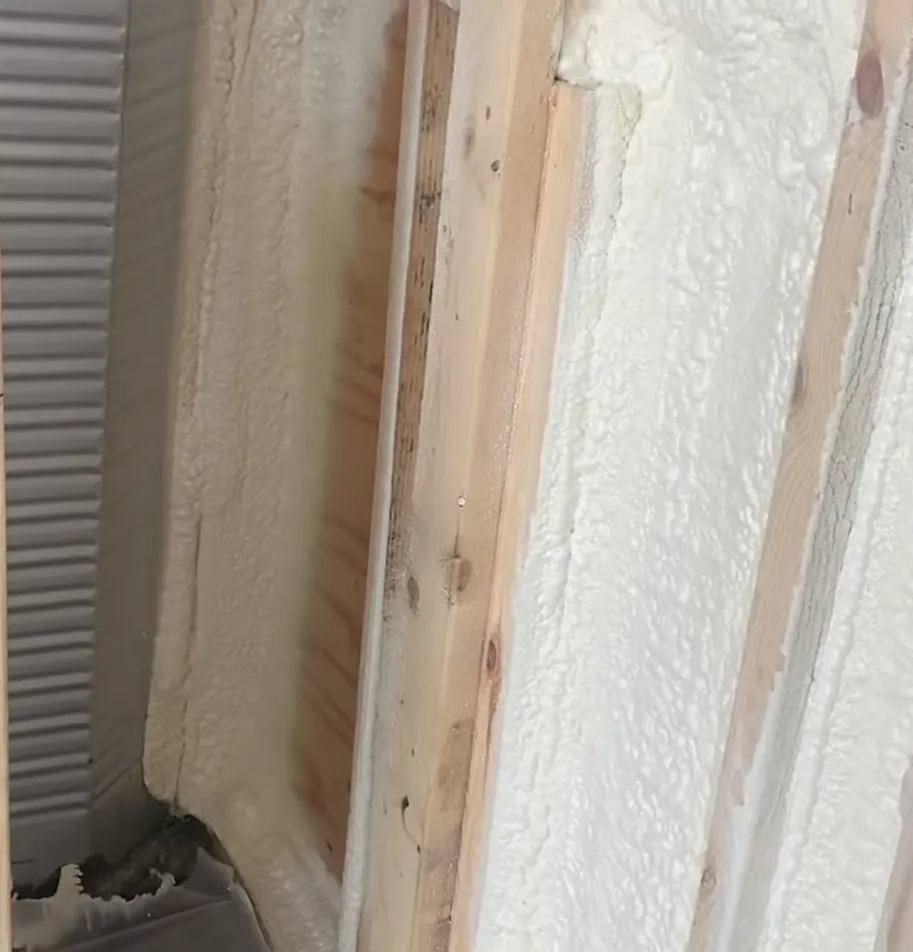
- Thermal bridging. Wood studs and plates form solid connections between the warm and cold sides of a wall. The R-value research on framing shows the impact clearly: insulation between studs cannot stop heat marching straight through lumber, so continuous exterior foam or spray foam over framing acts as a roadblock.
- Blank spots and compression. Gaps at corners and around wiring let convection currents form, sometimes letting heat bypass the insulation completely. Compressed batts also lose rated performance because the trapped air pockets get squeezed out.
- Air leakage. A small hole moves far more air, heat, and moisture than diffusion ever could across the same area, and moving air degrades insulation from the inside. A blower door test measures airtightness and pinpoints the leaks worth sealing.
Matching Insulation Types to Heat Transfer Problems
| Insulation Type | Best For | Modes Addressed | Limitations |
|---|---|---|---|
| Fiberglass batts | Open stud bays with standard spacing | Conduction, some convection when perfectly fitted | Gaps and compression cut performance sharply |
| Blown loose-fill | Attic floors and irregular spaces | Conduction across the ceiling plane | Can settle; needs air sealing below it |
| Rigid foam board | Continuous exterior sheathing, rim joists | Conduction plus thermal bridge breaks | Joints must be taped and sealed |
| Open-cell spray foam | Walls, cathedral ceilings, sound control | Conduction plus built-in air sealing | Lower R per inch; vapor planning required |
| Closed-cell spray foam | Rim joists, crawl spaces, rooflines, metal buildings | Conduction, convection, plus moisture resistance | Requires professional application |
No single product wins every application. The winning strategy matches each material to the heat transfer mode that dominates in that location, then ties everything together with a continuous air barrier.
Recommendations by Home Situation
| Your Situation | Recommended Approach | Why It Works |
|---|---|---|
| Drafty older home | Air seal the attic plane, then blow attic insulation to R49 or deeper | Convection dominates in leaky houses, so sealing first multiplies insulation value |
| New construction or major remodel | Closed-cell spray foam at rim joists and roofline | One application delivers insulation, air barrier, and moisture resistance together |
| Rooms above garages | Insulate the floor cavity and seal the band joist | Blocks convective and conductive loss to an unconditioned space |
| Second floor that bakes in summer | Roofline insulation strategy with attention to radiant gain | Slows heat driving down from a hot roof deck before it reaches living space |
| Damp crawl space | Closed-cell foam on walls with sealed vents | Insulates and air seals while keeping ground moisture out of the assembly |
Signs Your Envelope Strategy Is Working
- Temperatures stay even from room to room and from floor to ceiling, with no cold corners or hot second stories.
- Your furnace and air conditioner run shorter cycles, and the home holds temperature longer between runs.
- Drafts near outlets, windows, and the rim joist fade, and rooms get noticeably quieter.
- A follow-up blower door test or infrared scan shows tighter numbers and even surface temperatures.
- Winter problems such as ice dams and frosty attic sheathing stop appearing.
Stop Heat Loss With a Sealed, Well-Insulated Envelope
Understanding how insulation reduces heat transfer is step one; applying it correctly is where results come from. Our team at Springfield Excel Spray Foam designs envelope solutions that pair the right insulation with airtight sealing, matched to southwest Missouri’s climate zone and your home’s specific weak points. Call us at (417) 815-4629 or email [email protected], and let’s put the physics to work for you.
A home that holds its temperature is a home that costs less to run every single month.
FAQs
Does more insulation always mean less heat transfer?
No. R-values show diminishing returns with each doubling of thickness, and heat still moves through framing, gaps, and air leaks. Air sealing and thermal bridge control deliver gains that depth alone cannot.
What R-value should homes in the Springfield area target?
ENERGY STAR places our region in climate zone 4, with recommended attic levels of R49 to R60 and R19 over unconditioned floors. Deeper attic levels are advised for colder zones to the north.
Why does my house feel drafty if it already has insulation?
Drafts come from air leakage, which is convection, not from a lack of insulation. Fiberglass and loose-fill slow conduction but do not stop moving air, so leaks must be sealed for insulation to perform.
What is thermal bridging, and can it be fixed?
Thermal bridging is heat traveling through framing members that connect the warm and cold sides of a wall. Continuous exterior foam board or spray foam applied over framing interrupts those pathways.
How does insulation help during hot summers?
Insulation works in both directions by slowing heat that drives down from a hot attic toward your living space. Pairing attic insulation with air sealing keeps that inbound heat out and eases the load on your air conditioner.
Sources
- ENERGY STAR – Recommended Home Insulation R-Values – EPA program guidance defining R-value and publishing climate-zone insulation level recommendations for attics, walls, and floors.
- Natural Resources Canada – Keeping The Heat In, Section 2: How Your House Works – Government building science guide explaining conduction, convection, and radiation, stack effect, thermal bridging, and insulation installation guidelines.
- Wikipedia – Building Envelope – Reference overview of envelope definition, control layers, air barriers, blower door testing, and convective loop heat losses.
- Wikipedia – Thermal Insulation – Encyclopedia article on how trapped air cells reduce conduction and convection, thermal breaks, and factors influencing insulation performance.
- Wikipedia – R-Value (Insulation) – Technical reference on R-value definition, U-factor, additive layers, framing losses, and the role of spray foam in airtight assemblies.