

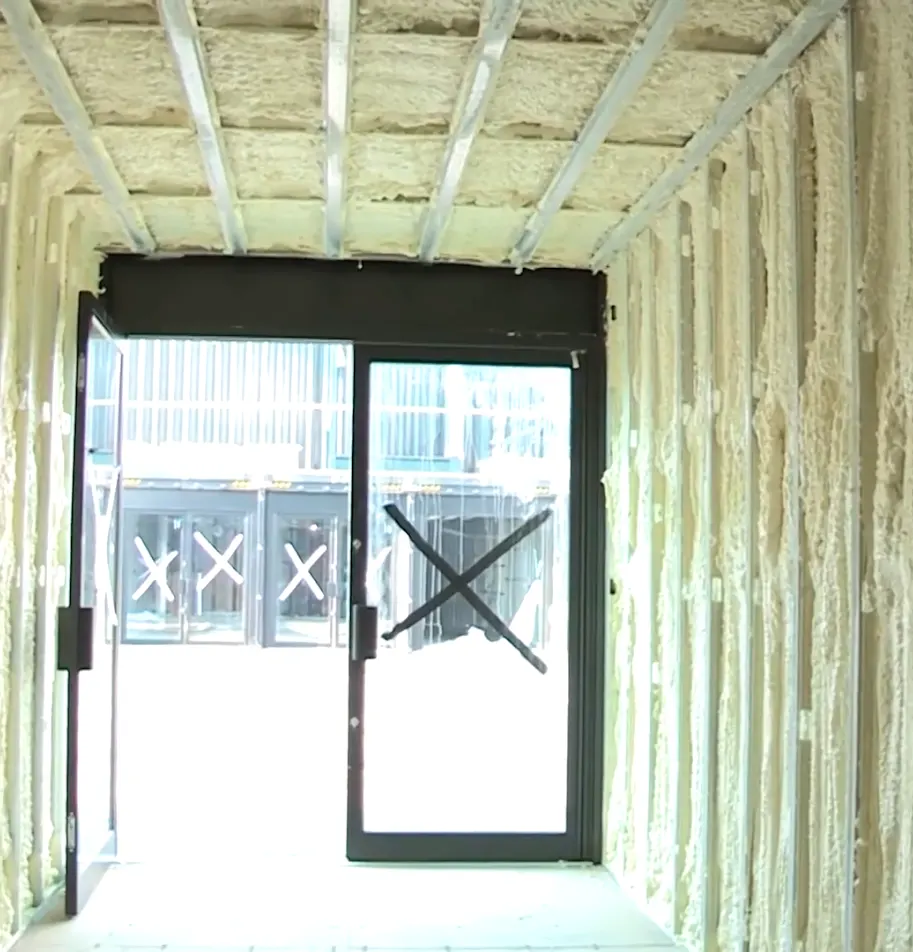
Open-cell spray foam insulation reduces heating and cooling costs by doing two jobs at once: it insulates against heat flow and stops the air leaks that waste the most energy. Applied as a liquid, it expands on contact to fill wall cavities, attics, and gaps that traditional batts leave open, delivering an R-value starting at 3.6 per inch along with a continuous air barrier. The savings potential is well documented. The ENERGY STAR estimates homeowners who air seal and insulate save an average of 15% on heating and cooling costs, or 11% on total home energy costs, and industry research shows spray foam can lower annual energy bills by 5% to 30%. Because as much as 40% of a building’s energy loss comes from air infiltration alone, sealing those leaks with open-cell foam is one of the most cost-effective upgrades available for homes in Springfield, Missouri, and the surrounding Ozarks. Investment depends on square footage and target thickness, and qualifying projects may also claim the federal 25C energy-efficiency tax credit.
TL;DR
- Air sealing plus insulation is the winning formula. The EPA estimates an average 15% savings on heating and cooling costs (11% on total energy bills) when homes are properly air-sealed and insulated.
- Up to 40% of a building’s energy is lost through air infiltration, according to spray foam industry research cited by the American Chemistry Council’s spray foam program.
- 9 out of 10 homes in the U.S. are under-insulated, per ENERGY STAR, and the combined leaks in a typical home equal leaving a window open every day of the year.
- Open-cell foam is a half-pound, low-density foam with an R-value starting at 3.6 per inch, an effective air barrier that stays vapor permeable and absorbs sound.
- Springfield, Missouri, sits in IECC climate zone 4, where ENERGY STAR modeling projects 17% savings on heating and cooling costs from professional air sealing and insulation upgrades.
- Right-sized HVAC equipment: In new construction, spray foam air sealing can allow HVAC sizing to drop by up to 35%.
- Federal incentives may apply: The 25C tax credit covers qualifying insulation and air sealing improvements, claimed through IRS Form 5695.
Why Air Leaks Waste More Money Than Thin Insulation
Most homeowners assume their energy bill problem is a lack of R-value. Open-cell spray foam in Springfield, MO can help address air leakage, which is often a bigger culprit. In reality, air leakage is usually the bigger culprit. When conditioned air escapes through gaps around wiring holes, plumbing penetrations, attic hatches, rim joists, and recessed lights, your furnace and air conditioner run longer to replace it. The Department of Energy attributes 50% to 70% of the energy used in the average American home to heating and cooling, so every cubic foot of conditioned air that leaks out costs you twice: once to heat or cool it, and again when outdoor air rushes in to replace it.
This is where open-cell spray polyurethane foam outperforms conventional materials. Fiberglass and cellulose slow heat transfer but do nothing to stop air movement. Open-cell foam is spray-applied, expands to conform to every surface, and forms a continuous insulation and air-sealing barrier in one pass. The EPA’s Home Performance with ENERGY STAR program specifically recommends sealing the attic floor before adding more insulation, because insulation without air sealing performs far below its rated potential.
How Open Cell Foam Insulation Works
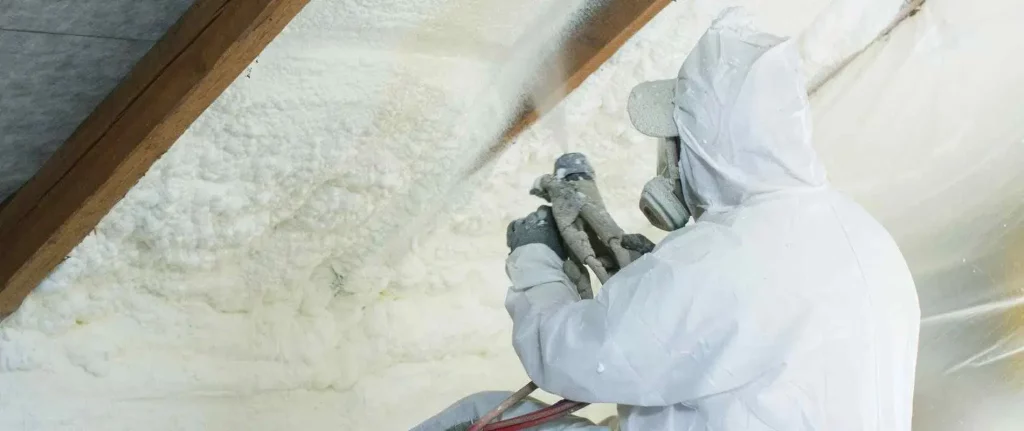
Open cell foam, also called low-density or half-pound foam, weighs roughly 0.5 pounds per cubic foot. Two liquid materials mix at the spray gun, react instantly, and expand on contact to fill cavities, cracks, and joints. Once cured, the foam’s open-cell structure stays soft and flexible, which gives it three distinct advantages for homeowners:
- Complete cavity fill. The foam reaches gaps, corners, and irregular spaces that batts and blown-in products routinely miss.
- Vapor permeability. It blocks air movement while allowing small amounts of moisture to pass through, which helps wall assemblies dry out rather than trap humidity.
- Sound absorption. The soft, open-cell texture dampens noise transfer between rooms and from outside, a benefit the Spray Polyurethane Foam Alliance highlights for creating quieter, more comfortable interiors.
Here is how the three spray foam types compare:
| Foam Type | Density | R-Value Per Inch | Best Use |
|---|---|---|---|
| Open cell (low density) | 0.5 lb/cu ft | 3.6+ | Wall cavities, vented attics, sound control |
| Closed cell (medium density) | 2.0 lb/cu ft | 5.7+ | Continuous insulation, unvented attics, moisture-prone areas |
| Closed cell (high density) | 3.0 lb/cu ft | 5.7+ | Roofing and exterior applications |
Open-cell foam fills deep cavities at a lower material density, which is why it is often the practical choice for full wall fills and attic applications where closed-cell thickness would be unnecessary, according to technical specs from the American Chemistry Council.
What the Savings Look Like in Climate Zone 4
Savings vary by climate, and this is good news for Missouri homeowners. ENERGY STAR’s energy modeling, based on DOE-2 simulation software, projects the following savings from professional air sealing and insulation upgrades:
| Climate Zone | Region | Heating/Cooling Savings | Total Energy Savings |
|---|---|---|---|
| Zone 5 | Northern Missouri, Kansas | 16% | 12% |
| Zone 4 (Springfield area) | Mixed-humid, Ozarks | 17% | 12% |
| Zone 3 | Southern U.S. | 14% | 8% |
| National average | All zones | 15% | 11% |
Industry research on spray foam specifically shows even wider results, with whole-home applications lowering annual energy bills by 5% to 30% depending on the home’s starting condition. Older Springfield homes with leaky building envelopes sit at the high end of that range because there is more leakage to eliminate.
Where Open Cell Foam Delivers the Biggest Returns
Location matters more than anything else in your project plan. We recommend prioritizing:
- Attic floors and rooflines. The attic is the largest leakage pathway in most homes, and sealing it stops the stack effect that pulls conditioned air out of your living space.
- Exterior wall cavities. Open cell fills the full stud depth, insulating and sealing in one application.
- Rim joists and band boards. These are among the worst leak points in basements and crawl spaces.
- Duct chases and open soffits. Ductwork running through unconditioned space loses efficiency with every leak it passes.
- Knee walls and attic hatches. Small areas, outsized leakage.
Factors That Influence Your Investment
Every open-cell foam project is quoted individually because several variables change the scope of work:
| Factor | How It Affects the Project |
|---|---|
| Square footage | More area means more material and spray time |
| Target thickness | Deeper passes raise the R-value and material volume |
| Accessibility | Tight crawl spaces and cathedral ceilings require more setup |
| Existing insulation | Old batts or blown-in material may need removal first |
| Air sealing scope | Sealing penetrations and top plates adds coverage |
| Building type | New construction, retrofits, and pole barns differ in prep needs |
Our team provides a clear, itemized scope before any work begins, so you know exactly what drives the number.
Real-World Project Scenarios for Springfield Homeowners
These representative scenarios show how open cell foam projects typically come together in the Ozarks:
| Project Type | Location | Scope | Typical Outcome |
|---|---|---|---|
| 1960s ranch retrofit | Springfield, MO | 1,800 sq ft attic floor, foam applied after old insulation removal | Draft reduction, steadier room-to-room temperatures |
| New construction walls | Nixa, MO | Full open-cell fill in 2×4 exterior wall cavities | Higher effective R-value and tighter envelope for code compliance |
| Bonus room above garage | Ozark, MO | Knee walls, ceiling slope, and floor cavity | Usable four-season space with less HVAC strain |
| Shop or barndominium | Rogersville, MO | Wall girts and roofline application | Reduced heat buildup in summer, faster warm-up in winter |
| Sound-sensitive upgrade | Springfield, MO | Interior partition walls in bedrooms and media rooms | Noticeable noise dampening between spaces |
Who Open Cell Foam Is Right For
- Homeowners with high heating and cooling bills, uneven temperatures, or drafty rooms
- Families building a new home who want an insulated, sealed envelope from day one
- Buyers of older Springfield-area homes with original or deteriorated insulation
- Anyone converting an attic, bonus room, or shop into conditioned space
- Households that want quieter interior rooms alongside energy savings
Who Should Consider a Different Approach
- Properties in flood-prone zones, where FEMA recognizes closed-cell foam as the flood-damage-resistant cavity insulation
- Applications needing a vapor barrier, such as below-grade walls, where closed-cell’s low vapor permeance is the better fit
- Projects with very shallow cavities that require maximum R-value per inch
- Situations requiring roof or exterior insulation, which call for high-density foam systems
The Real Question: What Does Doing Nothing Cost You?
Every heating and cooling season you wait, the leaks keep running up your utility bills. A home with the equivalent of an open window in its envelope cannot be fixed by a new thermostat setting or a higher-efficiency HVAC unit alone. The cost of inaction is measured in years of overspending, an oversized replacement furnace, rooms nobody uses in August, and insulation that underperforms because air keeps washing through it. The question is not whether your home is losing energy. It is how much longer you want to keep paying for it.
Get Professional Open Cell Foam for Your Springfield Home
At Springfield Excel Spray Foam, we specialize in open cell foam installations that cut heating and cooling waste for homes and shops across Springfield, Missouri, and the surrounding communities. Our experienced crew evaluates your building, identifies the leakage points, and installs the right thickness for your climate zone, backed by clear communication from the first walkthrough to the final pass.
Reach us at [email protected] or call (417) 815-4629 to get started and to
Stop paying to heat and cool the outdoors. Let our team seal your home the right way the first time.
FAQs
How much will open cell foam actually reduce my energy bills?
EPA modeling shows air sealing and insulation together save an average of 15% on heating and cooling costs, and homes in the Springfield area’s climate zone 4 model at 17%. Whole-home spray foam applications have been shown to cut annual energy bills by 5% to 30% depending on the home’s starting condition.
Is open-cell or closed-cell foam better for saving money?
Closed-cell delivers a higher R-value per inch and doubles as a vapor barrier, while open-cell provides full cavity fill, air sealing, and sound absorption at a lower material density. The right choice depends on the assembly, and our team recommends the fit for each area of your home.
Does open-cell foam stop moisture?
Open-cell foam is an air barrier but stays permeable to vapor, which allows wall assemblies to dry rather than trap humidity. It is not a vapor barrier, so below-grade or moisture-heavy applications are better served by closed-cell foam.
Are there tax incentives for installing open-cell spray foam insulation?
Qualifying insulation and air sealing improvements can earn the federal 25C tax credit, claimed by filing IRS Form 5695 with your return. Our team can help you understand which parts of your project may qualify.
Will open-cell foam help with noise as well as temperature?
Yes. The foam’s soft, open-cell structure absorbs sound energy, which reduces noise transfer between rooms and from outside, a frequently cited benefit for bedrooms, nurseries, and home offices.
Sources
- ENERGY STAR – Why Seal and Insulate? – EPA estimates on average savings of 15% on heating and cooling costs from air sealing and insulation, plus data showing 9 in 10 U.S. homes are under-insulated.
- ENERGY STAR – Methodology for Estimated Energy Savings – Climate-zone-by-zone savings modeling showing 17% heating and cooling savings for zone 4 homes and the national average of 15%.
- American Chemistry Council Spray Foam Program – Spray Foam Fast Facts – Industry data on 5% to 30% annual energy bill reductions, 40% of building energy lost to air infiltration, HVAC sizing reductions up to 35%, and 25C tax credit guidance.
- American Chemistry Council Spray Foam Program – Types of Spray Foam – Technical specifications for low-density open-cell foam, including 0.5 lb/cu ft density, R-values starting at 3.6 per inch, and vapor-permeable, sound-absorbing performance.
- Spray Polyurethane Foam Alliance – Benefits of SPF – Trade association research citing Department of Energy findings that heating and cooling account for 50% to 70% of average home energy use, plus guidance on noise control, indoor air quality, and FEMA flood-damage ratings for foam types.